


Article scientifique
Reprodcast – Synchronisation des chaleurs
Synchronisation des chaleurs
Protocole prostaglandines
Principe
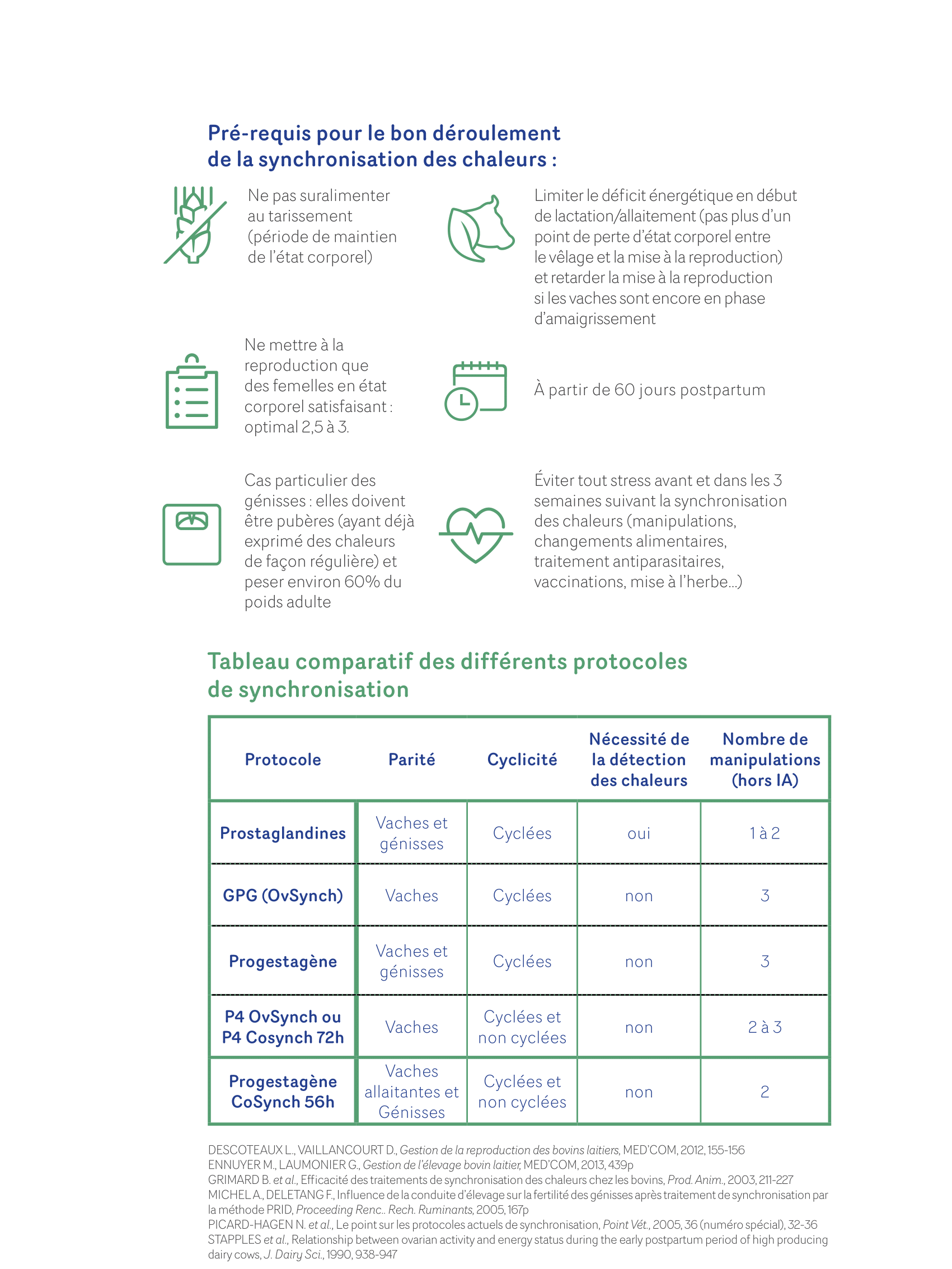
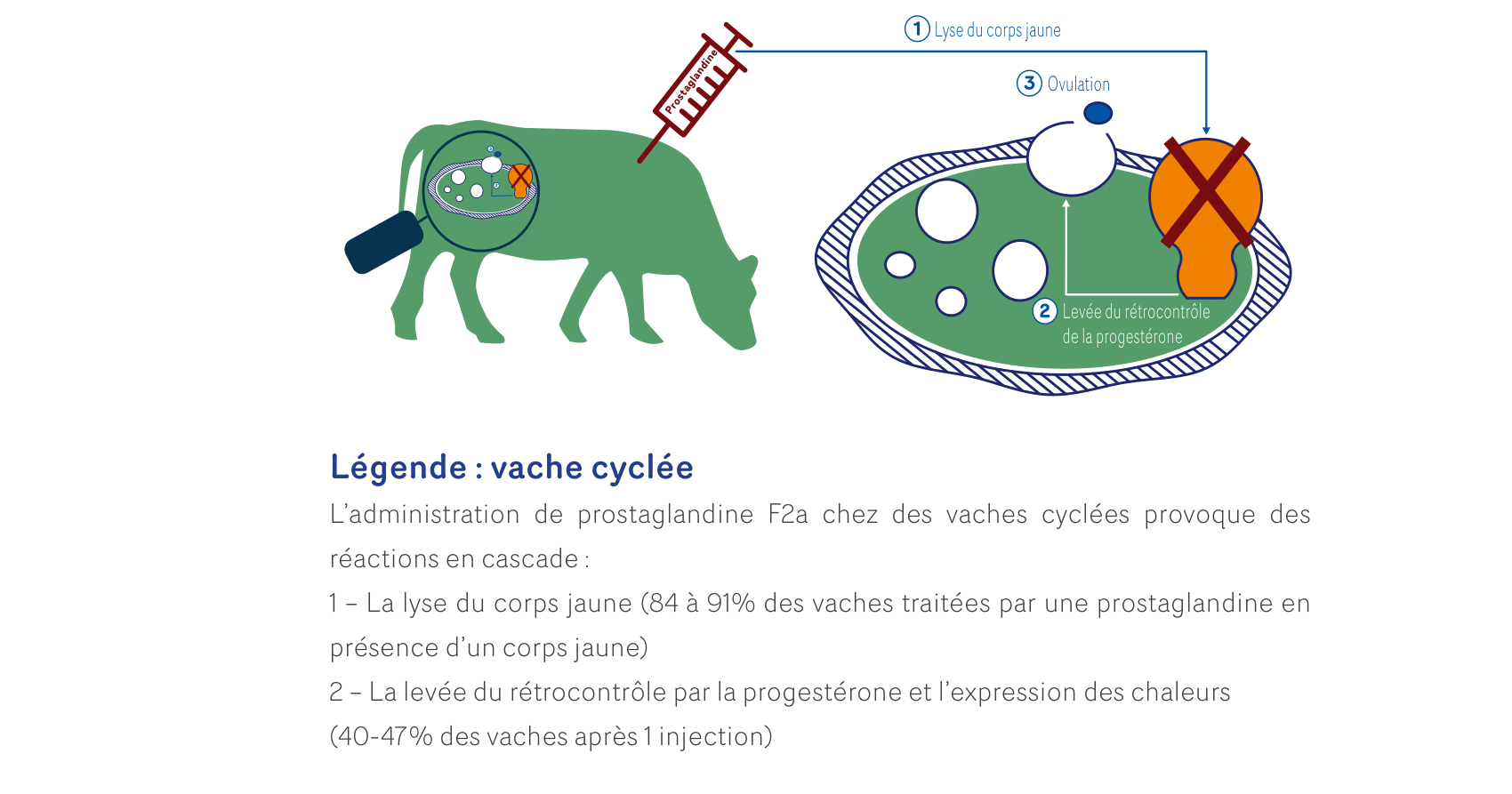
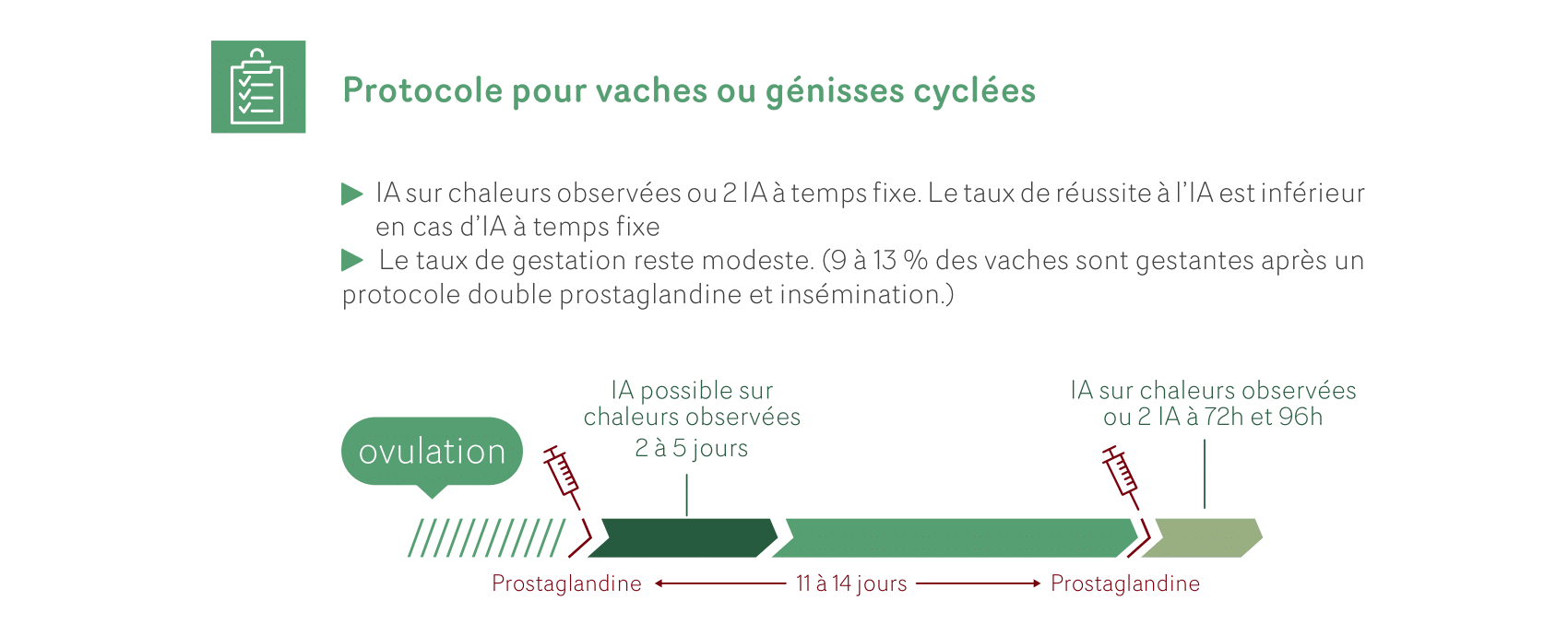
→ Le corps jaune n’est sensible aux prostaglandines qu’à partir de 5 à 7 jours d’âge. L’administration de deux doses à 11 à 14 jours d’intervalle permet de s’assurer que toutes les femelles auront un corps jaune sensible lors de la deuxième injection.
→ Le délai de venue en chaleurs suite à l’induction de la lutéolyse par une prostaglandine est très variable (2 à 5 jours). Il dépend du stade de la vague folliculaire au moment de l’injection.
→ Les animaux venant en chaleurs suite à la première injection de prostaglandine peuvent éventuellement être inséminés à ce moment (et la seconde injection ne sera pas réalisée sur ces animaux)
CHASTANT-MAILLARD S., Protocoles de synchronisation-induction des chaleurs chez les bovins, Point Vét., 2018, 49 (numéro
spécial), 136-138
STEVENSON J. et al., Failure of timed inseminations and associated luteal function in dairy cattle after two injections of
prostaglandin F2-alpha, Theriogenology, 1987, 937-946
GRIMARD B et al, Efficacité des traitements de synchronisation des chaleurs chez les bovins, INRA Prod. Anim.,2003, 16 (3),
211-227
PEREZ-MARIN CC et al, Oestrus synchronisation in postpartum dairy cows using repetitive prostaglandin doses: Comparison
between D-cloprostenol and dinoprost, Acta Vet Hung, 2015, 63(1):79-88
PURSLEY JR et al, Compared to dinoprost tromethamine, cloprostenol sodium increased rates of estrus detection, conception
and pregnancy in lactating dairy cows on a large commercial dairy, Theriogenology, 2012, 78 : 823–829
STEVENSON JS, PHATAK AP, Rates of luteolysis and pregnancy in dairy cows after treatment with cloprostenol or dinoprost,
Theriogenology, 2010, 73(8):1127-38
VALLDECABRES-TORRES X et al, The effect of dose and type of cloprostenol on the luteolytic response of dairy cattle during
the Ovsynch protocol under different oestrous cycle and physiological characteristics, Reprod Domest Anim, 2013, 48(5):874
80
Protocole GPG (ou OvSynch)
Principe
→ Première GnRH : lutéinisation du follicule dominant présent et démarrage d’une nouvelle vague folliculaire. Mise en place d’un nouveau corps jaune.
→ Prostaglandine: induction de la lutéolyse (du corps jaune induit et du corps jaune endogène s’il était présent)
→ Deuxième GnRH : ovulation du nouveau follicule dominant issu de la vague née après la première injection de GnRH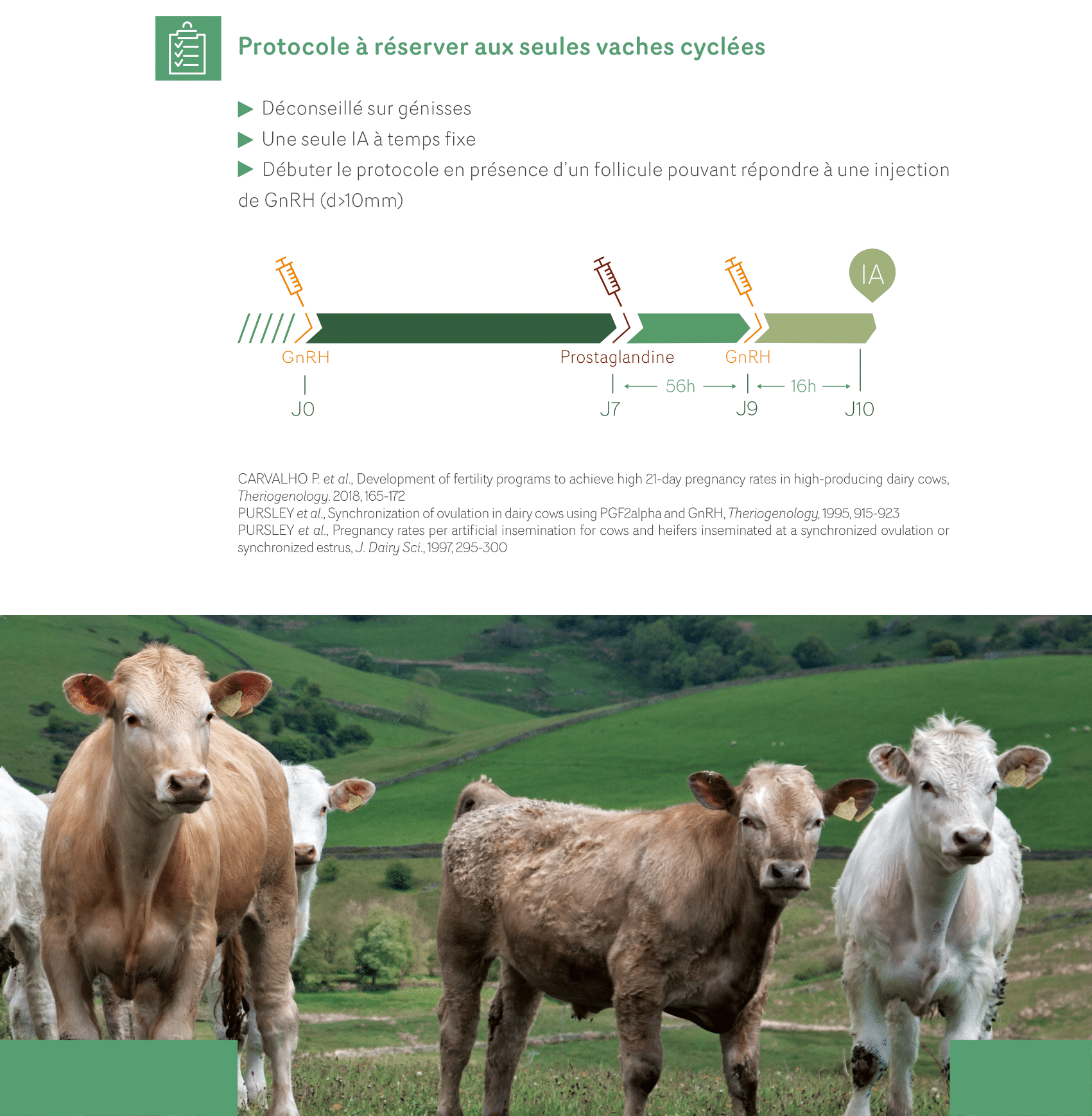
Protocole Progestagène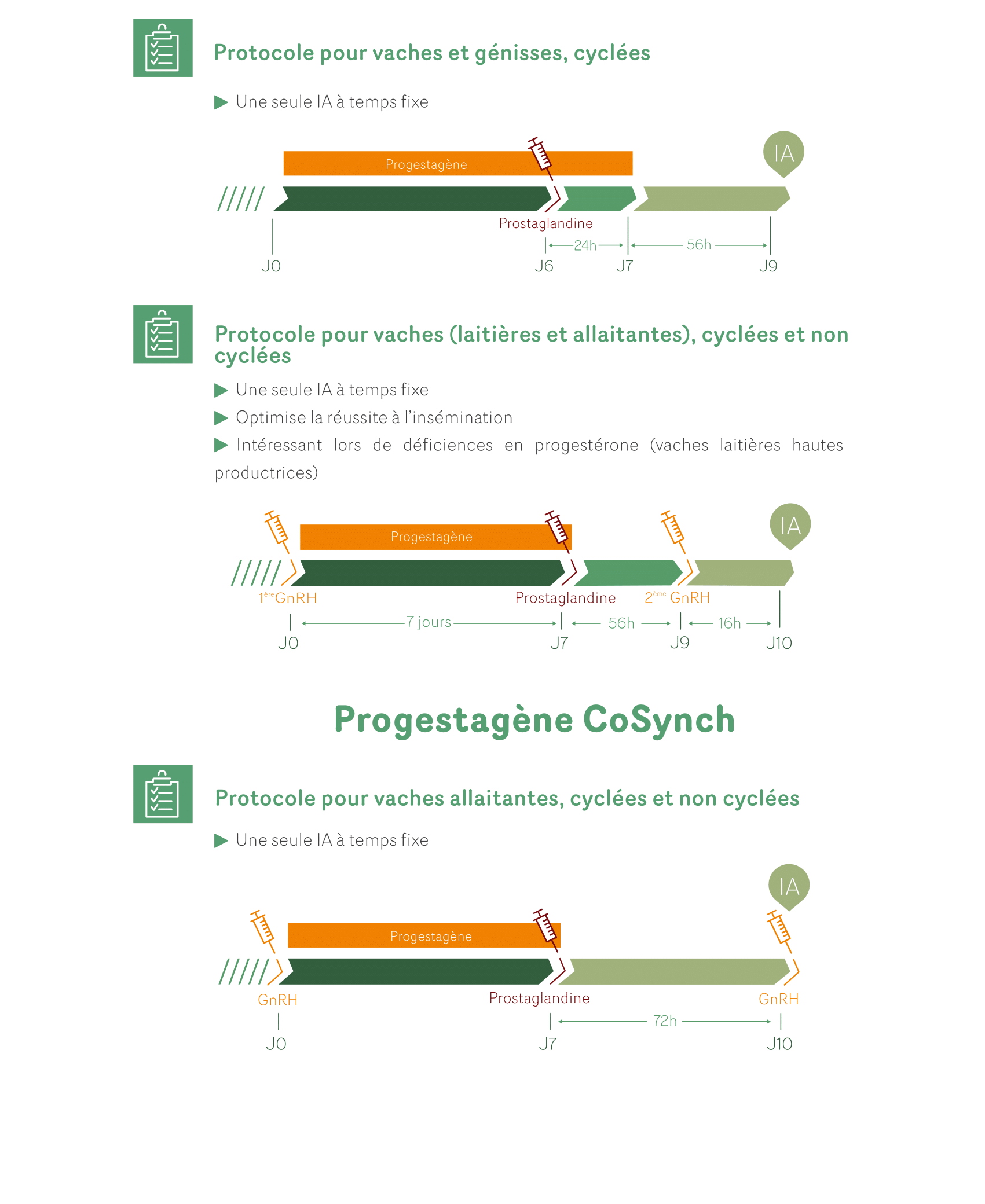

Visionner les épisodes ReprodCast
ReprodAction – Ceva ruminants – France
Share this publication:


